Showing posts with label living in Holland. Show all posts

Thursday, October 29, 2015

It's All Right and Good Cheap Beer: Czech-Style

Our trip to Prague was cancelled last summer - we were supposed to cycle from Munich to Prague along the river when our cycling friend's mother died unexpectedly. The city never fell off our adventure list and we decided to squeeze in a quick trip before our move back to the States, this time without the bikes. We arrived with only a few preparations and no expectations - the best way to travel.

Saturday offered us the bluest skies and we used  the 
opportunity to cross the St. Charles Bridge to go see the Prague Castle. First off, the St. Charles bridge was almost a section of the city itself. It is a pedestrian bridge with religious statues along the way spanning the Vltava River. People weren't using it as a means to get from one side of the river to the other, but instead were just hanging out along the bridge, looking at the artist booths, the street performers and enjoying the nice day. We wandered along with them. Eventually we reached the other side and climbed the hill to see the Castle (Prazsky hrad -where the President of the Czech Republic lives) and St. Vitus Cathedral. The inside of the cathedral was mostly closed off, but not before we could appreciate the stained glass windows with the intense sun reflection on the inside. The guards with trumpet and drum patrol changed shifts with much pomp and circumstance. The ceremony to change guards was fun to see, not merely a handing off of the weapons used to guard the Castle.

As we left, we smelled the roasting sausages and decided to pick up some street food while watching the street performers. The brat sausages were to Paul's liking and I noticed that sauerkraut and potatoes were available for vegetarians. Yum! There were many outdoor markets and street musicians also in this vibrant area of town.


We left Castle hill and returned to our hotel on the right bank of the Vltava River, near Old Town Square. It was too glorious to be inside, so we hiked to the Old Town Square to people watch. We came across more food trailers and bought some Trdelnik - a roasted bread pastry that is either covered in sugar and cinnamon or slathered on the inside with Nutella. The smell from the rods of Trdelnik was very satisfying. We realized that we had not eaten at all in a typical restaurant, but had munched on street food all day - very tasty street food.


Sunday we got up early to be on the St. Charles bridge before it was busy to get some photos of the saints on the bridge. We thought we had an appointment for a bicycle tour of the city that morning, but there was a miscommunication with the tour company. We rebooked for the next morning and took the cycling guide's advice on finding some good breweries in the city to take in some inexpensive beer since we had some open time. We also wanted some traditional Czech food so we went to Novomestsky Pivovar for a beer and some Czech food - potato rolls, sausages, pork chops, sauerkraut, and boiled potatoes (for my husband, the meat eater). I had a pretzel with mustard and salad. We left there and considered going to some of the historic breweries on the west side of the river, but decided to halt on the day-drinking to see more of the market square and to be outside. There is a beer called X33 that has an alcohol content of nearly 12%. We also considered going to get some original Budweiser beer (we've had it before - it is truly tasty). We passed on it. The cobblestone streets are very uneven when walking sober, it's seemed dangerous to drink more.

Sunday evening, we bought tickets to a classical music concert with a soprano and string quartet. It was to be held in an old monastery, now converted to concert hall and office building. While we were waiting for the concert to start, a violin player was playing outside the open windows, courting the restaurant patrons outside. The bass player went to the window five minutes prior to start time to call the violinist upstairs so the concert could start. It was a fantastic venue and very nice music, complete with a mix of traditional Czech folk songs.

Monday we started our appointed bike tour, which included a history talk of various points around Prague. We started near the bike shop and saw the Powder Tower, one of the oldest structures that was part of the town wall. The gun powder was stored here to keep it away from the enemy. We pedaled to the Old Town Square at the Astronomical Clock. We waited until it dinged on the hour to see the twelve apostles at the top and the statues perform below as they have for several centuries. We looked around the Square to see the Church of our Lady before Tyn, as well as the original city hall that had been mostly destroyed by the Nazis on their way out of town. The National Gallery, a very unique building, holds a prominent place on the square.

We left the main square and rode down narrower streets to the Jewish Quarter, which for the most part was still in tact from WWII. Hitler decided to use this Jewish neighborhood as a Museum and therefore, most of it was not destroyed during the war. The oldest Jewish temple in Europe is located in this section of town. We crossed the bridge to see a few sites on the west side of the river, but mostly we found ourselves looking back at the view of the East side of the city. We found a couple unique pieces of art along our ride. We were within a block of the Lennon Wall, but our guide seemed to be pressed for time and didn't even mention it. We found Wenceslas Square and heard about the starts of revolutions by the people that have taken place over time, including the Velvet Revolution that started with 20,000 students protesting Communist rule in 1989. The next day there were 500,000 people in the square. Days later the Communist leaders resigned and it was the end of Communism in the Czech Republic after 41 years of control. We arrived back where we started at the bike shop after two hours of cycling. We ate lunch outside near the Municipal House at an active outdoor market to rest and people watch.

After lunch, we immediately went back to the west side of the river to find the Lennon Memorial wall and to figure out where to catch the funicula for our dinner at Nebozizek, on the peak of the Petrin Hill overlooking the city. We found the area where the wall was to be and at first was very disappointed. It was small and the graffiti to memorialize Lennon was not very artistic. There were over 500 locks on a bridge over a small waterway. We were not impressed. We were getting ready to leave, when I looked down an alley and caught a glimpse of the REAL Lennon wall. It would have been terrible to miss this tribute to John Lennon. A lone guitarist was playing "Imagine" as we walked up. I just wanted to be there. It occurred to me that though Lennon had never visited Communist Prague, his pacifism through music touched everyone. The Communist youth dared to paint this wall when Lennon died even though his music was banned by the communist regime.  The art on the wall has evolved over time, but it still seems like a coming together to celebrate not only Lennon, but a celebration of giving peace a chance. I was touched.


We traveled along the river and found out sadly that the funicula to Petrin hill was out of service, which would require a 30 minute uphill climb on our part to get to our dinner reservation for the night. As it started to rain and then became foggy, we decided that dinner back at our hotel sounded better and better. We would be missing the view at the top of Petrin hill anyhow. We dined on beetroot soup, and other Czech delights at our hotel and then returned to our room to log in to watch some of our favorite football teams in America as it rained outside. Yes in Prague as well as the rest of the world, Lennon taught us "whatever gets you through the night . . . it's all right, it's all right".

Thursday, August 20, 2015

Iceland: No one place like this one

Iceland reminds me a bit of Alaska, a little bit of Colorado and a part of old Austin, Texas from twenty years ago. And so far, it's our favorite adventure of all of our recent travels. As Stephen Markley says “The problem with driving around Iceland is that you’re basically confronted by a new soul-enriching, breath-taking, life-affirming natural sight every five goddamn minutes. It’s totally exhausting.” We decided to pace ourselves and just take on part of the island. It was still beautifully exhausting.

We arrived in Reykjavik on a Saturday night. We shuttled into the city and checked into our rented house for the
week. It was formerly a rectory from the church next door - an old house with a bunch of character on a lazy street next to downtown Reykjavik. Our daughter Erin and her husband Seb had already arrived and unpacked after their 3 day hike in the middle of the country. They greeted us with hor d'oeuvres and drinks and photos of their hike. We relaxed that evening but couldn't wait to get started with the city the next day.

The weather was warm (for Iceland) as we hiked around Reykjavik. We walked to the harbour and easily found the Hofdi House - a historic place that is not open to the public. It was formerly a home of the French consul, then the British ambassador - until he moved out due to a ghost called "the white lady." Most importantly, this is the location when Reagan and Gorbachev met to try to dissolve the cold war in 1986. No agreement was made in 1986, but it was the start of talks between the two leaders which lead to the destruction of the Berlin wall. This house was ordered from a catalog in Norway. Iceland has very little timber therefore wood is not used in construction of buildings. We passed the many unique tourist shops and restaurants on our walk and the vibe of the city was vibrant, quirky, interesting, and friendly.

We came to the church that is a famous icon of Reykjavik - the Hallgrimskirkja. There was a wedding going on so visiting the inside of the church was not possible. We rode the elevator up to the tower to get a view of the city however. We also played with the mirrors outside
that resulted in some funny looking selfies. We walked back toward the harbour toward Harpa - the town's concert hall and convention center. We went crazy taking photos of this building, both inside and out. The angles of the glass gave us some fun photos. We
could find ourselves in the sections of glass the light reflection gave us some great photos. We noticed a large yacht off the coast near Harpa the music hall. Larry Ellison was parked out there and we saw his helicopter come and go. We bought tickets to Pearls of Iceland - a concert with original Icelandic songs and we relaxed for a bit while listening to the music. The language of Iceland sounded like Russian to me. Erin and Seb cooked dinner that evening in our house - Icelandic cod and a nice salad.

Monday we were to drive the famed Golden Circle, the 300km loop towards the center
of the island. We woke up to a call from the rental car company that "our car" had been involved in an accident the day before and we would be delayed by 3 - 4 hours to begin our drive. The sun doesn't set until 11:30 at night, so we were trying to be patient about our timing. Around 1pm we got our car and we drove to the  Thingvellir national park when the east and west continental plates meet. It's like a deep divide between the two sections of land. We hiked for a bit and then drove to Geysir. Geysir is the original geysor and is the namesake for all erupting hot springs. It was pretty reliable, spouting every five minutes or so. The action of the bubble before eruption was mesmorizing.
We continued to Gullfoss - the waterfall of all waterfalls. Since the sun was out, we experienced many rainbows there - we felt like we were wearing them in fact. We captured over 400 photos of our day's adventures.

We arrived back at 8pm and went to a restaurant that Erin and Seb had tried a few nights
earlier that is so hip it doesn't even have a name. It goes by it's address Hverfisgata 12 or "Pizza that has no name". There isn't a sign outside either exhibiting unique marketing. We entered and felt like we were in Austin, Texas. The staff was extremely helpful. I couldn't decide between the beet pizza or the Etruscan Elite with rocket and walnuts. The Etruscan pizza was amazing.

Tuesday was our day for a hike near Skogafoss - the tallest waterfall in Iceland. Erin and Seb decided on the 10 hour hike from Skogafoss across the glacier to Thorsmork. We opted for a shorter hike so we could take our time with photos and avoid the technical hike near the end. Our plan was a good one as we passed over 15 waterfalls in succession on the side of the volcano Eyjafjallajokull  that disrupted airplane travel five years ago. It's hard to describe the feeling that day as we hiked. It was "soul-enriching, breath-taking, life-affirming" for sure and made me emotional in appreciating
the opportunity to be there. We returned to the city to eat at Icelandic Bar, known for the fish and chips. The cod was the best I've had and the sweet potato fries substitute for the chips was a great choice. Erin and Seb arrived home around midnight from their hike and Paul walked downtown with Seb to grab a late night hot dog made of lamb at the stand near the harbour.

Wednesday was our day to indulge. As required, we bought our entrance
tickets to Blue Lagoon before we arrived. We showered naked before entering the hot mineral pool to adhere to the strict health requirements. I lathered up my hair in conditioner as well to keep the minerals from drying it out. Our entrance package gave us a drink, a mud pack and mask. The combination of warm mineral water, a glass of champagne, and our facial mask gave us an odd combination of giddiness, relaxation, and tranquility. What fun we had! We took a group photo of ourselves with our mud masks on. The minerals really do make your skin soft and the mud masks make you laugh at yourself. We had been afraid the experience might be too touristy at first, but later decided that it was one of our favorite days.

That evening, we had reservations at the world-renowned Dill restaurant. We discovered that the owners of Dill also owned the pizza restaurant we had eaten at a few nights before. We were finding the restaurant scene in Reykjavik  fairly remarkable. We knew it would be an expensive night, but we opted for the 7 course dinner with wine pairings (how often do you get to go to a famous restaurant, right?).
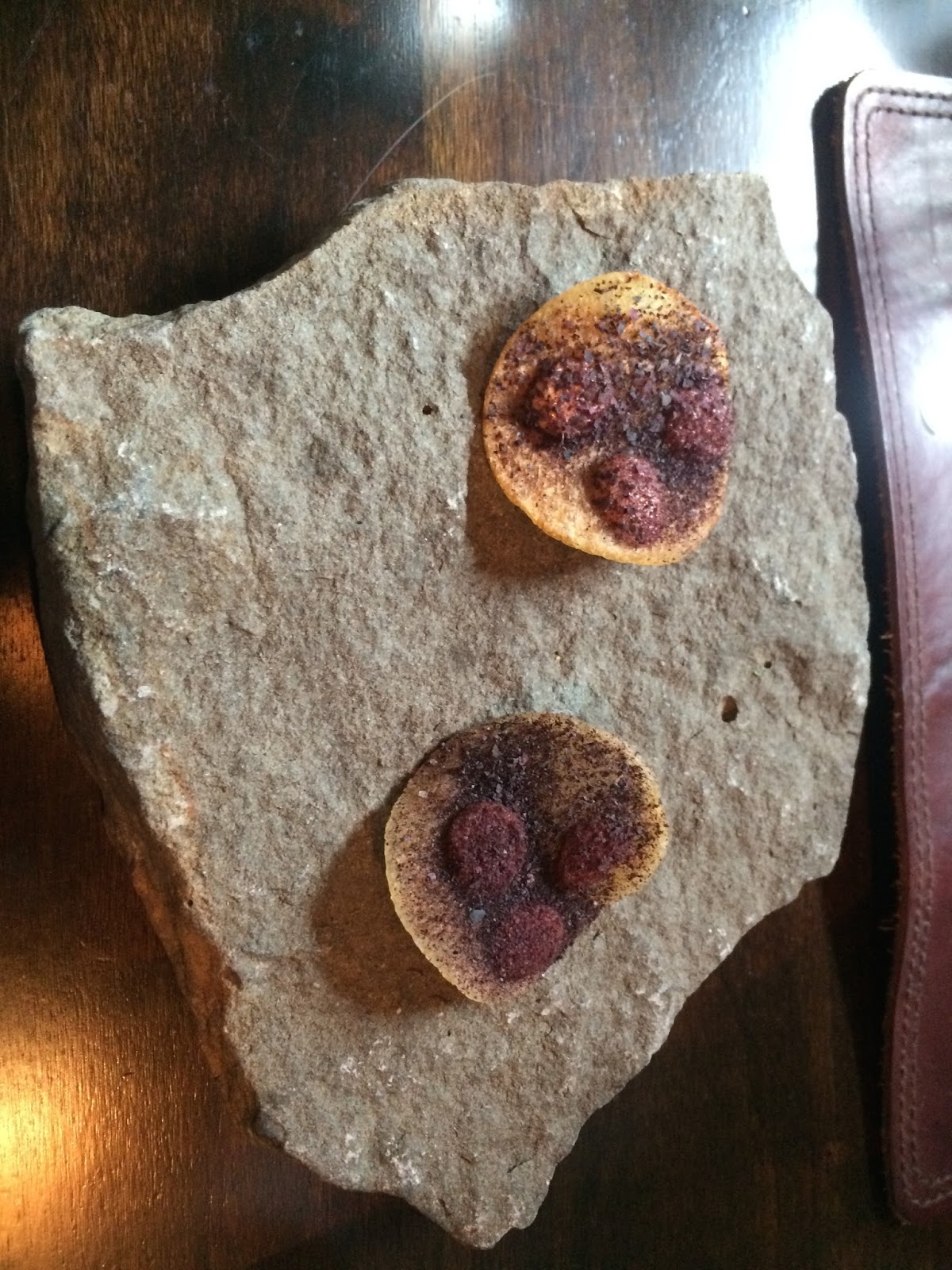
The first course was a pickled carrot sandwich.  It had cream cheese and caraway sandwiched between the two pieces of carrot - about the size of a dime.  Another course was a beet flower. The vegetarian version of that had tarragon seeds in the center with roasted yeast. The meat version had liver. The next course was a potato chip with toasted peppers with seaweed. My favorite course was the beet quinoa dish with cheese and lava salt. The dessert of burnt bay leaf ice cream was remarkable as well. The wine pairings were also varied, combining fermented beers and white and red wines to our delight. My body was treated to tastes and mineral immersions that day to both excite and soothe.

Considering the advice of friends who had visited Iceland, we decided to
undertake the 5 hour one-way drive to go visit Glacier Lagoon, locally called Jökulsárlón near the Vatnajökull National Park. The drive there was long but scenic. We saw many horse farms for which Iceland is famous. The horse there has a particular stride that is different than any other horse in the world. We were close to the coast several times but resisted stopping as the day would be long just to reach the lagoon. We had to gas up whenever we saw a station because there were not cities on this part of the island. We saw bright green mountains along our way. Then the terrain changed to barren tundra fields covered with volcanic ash and lava. In the distance, we could see the
glacier. Unexpectedly, we crossed a one-way bridge and the glacier was right before us. On the other side of the bridge was the Atlantic Ocean with chunks of glacier floating in it and covering the beach. We spent several hours taking in both sides of the highway, near the glacier itself and then near the lagoon with the beach. We ate our packed lunch on top of lava rocks over looking the ocean with chunks of ice breaking off and floating away as we ate. After we exhausted the photographers in the group, we headed back home with a couple of stops along the way near beaches that had rock formations, caves and the exotic puffins flying along the rocks. We arrived back in the city and quickly grabbed a bit to eat to finish the day.


Friday was our last day in Reykjavik. We were definitely not interested in getting back in the car after our travels the day before. We indulged in a brunch at the Coocoo's nest near the harbour in an area that we not previously visited.  Interestingly, a sign along the way pointed us to a Texas restaurant offering "Texasborgarar", which we assume were burgers. The Coocoo's Nest also screamed hipster, but it was low-key, organic, quirky and fresh. The homemade bread itself looked worth the visit alone. The music playing was blues and soul.  I had a salad with walnuts and cranberries with a piece of the homemade bread. The open faced sandwiches looked hearty and tasty. We left to walk off lunch and got lost on the way back. We came across a park filled with locals, mothers with children and older people feeding birds and sat and people watched for a while. We meandered home and relaxed for the afternoon.

Around five, we met Erin and Seb at Slippbarinn - a trendy bar in the lobby of the Austin-esque Marina Hotel prior to our dinner reservation at the GrillMarket - a place to celebrate our last night in Iceland. The cocktails were very creative and it was difficult to choose. I chose a Pippi Gonzales - tequila, dill, cucumber, lemon, and dill-infused olive oil. Paul chose the Borderline -  a stout liquor, vodka, cream and roasted hazelnuts. His drink was like dessert. They had several interesting drinks, including ones with bacon-infused brandy, birch,  and mezcal. The Grillmarket was close by.  Most of their menu items were grilled meats and fishes, but the sides were tasty for the vegetarians. Before we left, we toasted the adventurous week with our daughter and son-in-law, celebrating Iceland and it's beauty. We each commented on our favorite days and it was noteworthy to see that we all chose a different day's adventure.

Iceland Air allows travelers between Europe and the US to stopover at no additional cost on airfare. It is definitely a place to which I would return.There is no one place like this one.

Wednesday, December 3, 2014

Barcelona: Unfinished Business

I remember playing a classical piece on the piano and playing every note but the last chord, leaving others in the room unsatisfied at the ending since they were expecting to hear the chord that finished the song. That is how I felt when I left Barcelona - there was so much left undone to feel finished. It is definitely a city I would like to visit again.

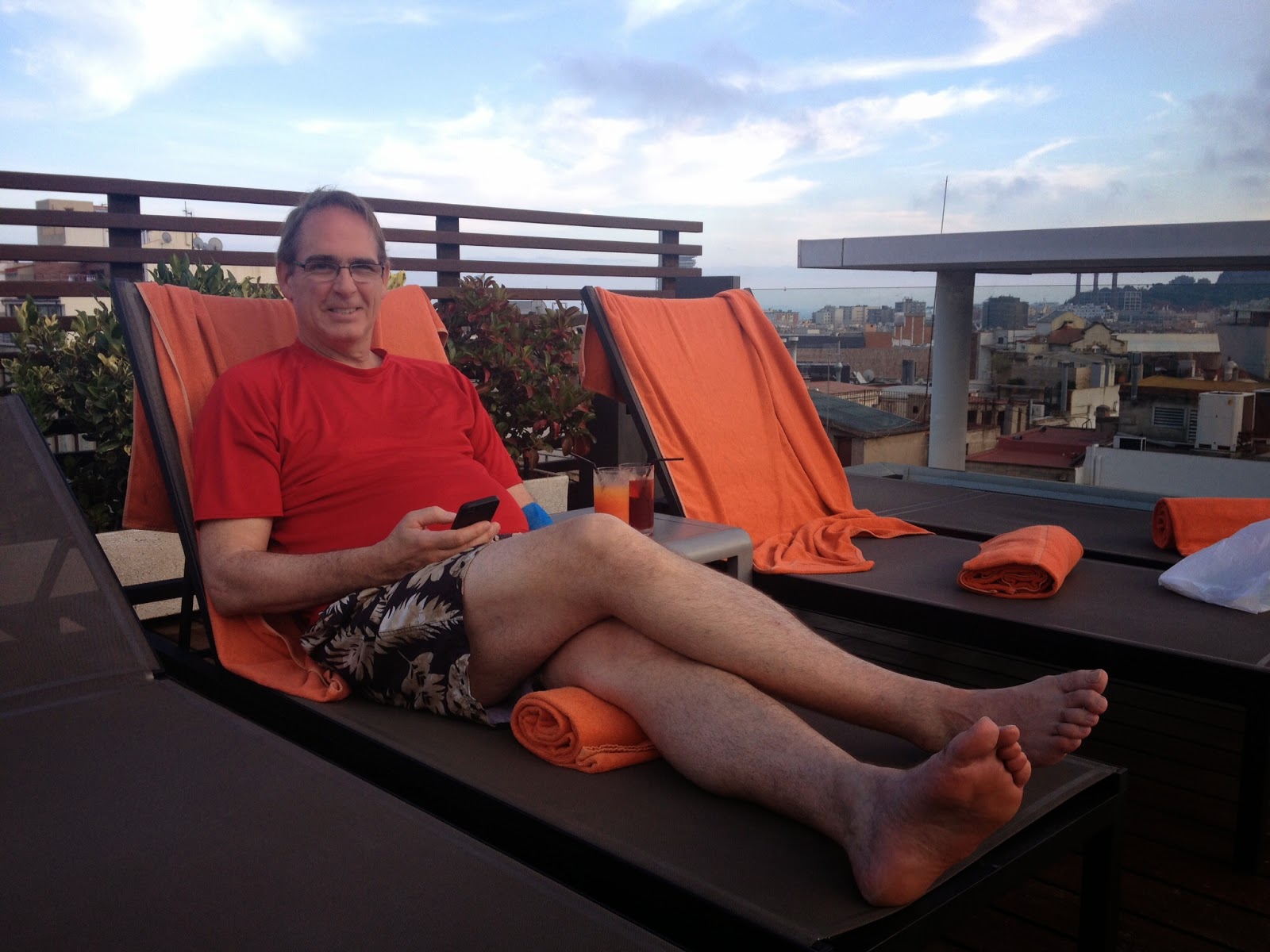
We arrived late Thursday evening and took a cab to our hotel called Hotel Jazz. It was located near the University area, not far from the Las Ramblas, and close to the Latin quarter and a short walk from the beach. The hotel had a rooftop pool and bar and overlooked the University area. We dropped our suitcases and immediately walked to Las Ramblas for some tapas and sangria. I had heard that the food was not so great on the Las Ramblas because it was a touristy area, but either because we were hungry or the food had some spice, it was tasty to us.

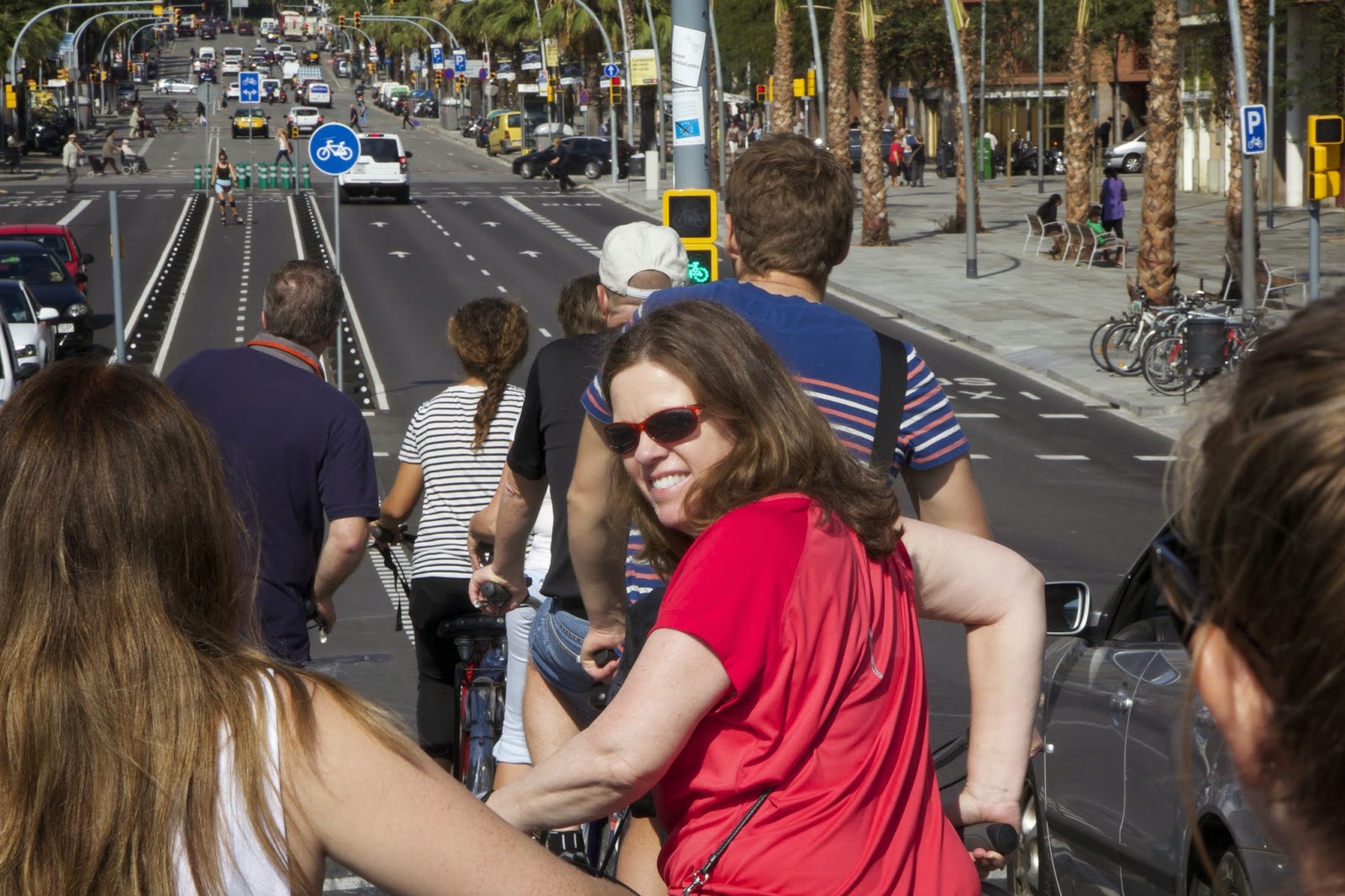
The next morning we walked through the Gothic Barrio to Plaça Sant Jaume to meet Austin, Texas based Fat Tire bicycle company for a bicycle tour of the city. We did the same in Berlin and knew that it was the best way to get a feel for the city, as well as a way to get some exercise. It was a four hour tour and included some highlights of the city, including the government area of town in Placa Sant Jaume and the nearby Plaza del Rei where Christopher Columbus accepted the funds from Queen Isabella for his voyage west (to actually what is now Bermuda and an island called Hispaniola - not North America as most people think). Queen Isabella is reported to have had a personal relationship with Columbus, but also struck a deal to get 10 percent of the trade that he sold.  It felt amazing to be in this historic plaza.

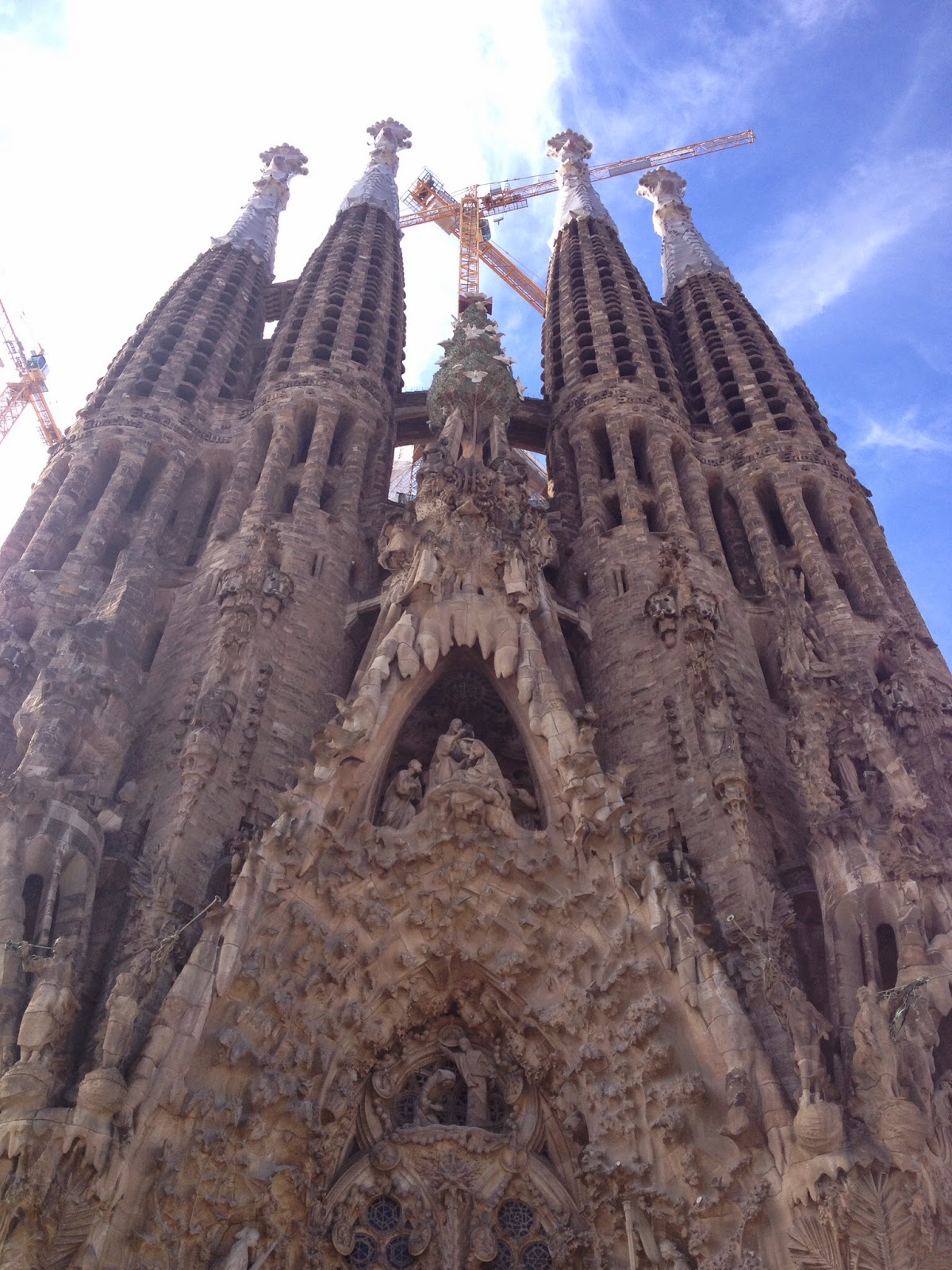
We then rode to the Catedral in the Gothic barrio,  to the beautiful historic Palau Musica (music palace), then onto the  Parc de la Ciutadella which was first a fort, then turned into a park and a zoo. We stopped for photos before riding to the other side of the city to the La Sagrada Familia Catedral designed by the famous architect Gaudi. It was the first glimpse of this church and left us wanting for more. The style of this church from the outside was impressive, but we only had time to see one side and no time to go inside at all.

On the way to the Barceloneta beach, we rode through heavy traffic to find  lunch at another Tapas bar (Tapa Tapa). The beach was busy on the sunny day and we had time to enjoy our Spanish wine while watching the locals sunbathe.  Paul quickly downed his lunch so he could get some photos of the beautiful beach and perhaps a peek at the topless sunbathers. We finished our ride by seeing the Arc del Triomf, the Olímpica village of Barcelona, the eclectic El Borne neighborhood with restaurants and boutiques, and we finished our tour with the Basílica de la Santa Maria del Mar. We were impressed by the diverse offerings of the city and got a glimpse into the history of Barcelona.


After our ride, we returned to our hotel and spent the afternoon with drinks on the rooftop pool which overlooks the city. We relaxed and then showered and walked to the El Borne area to dine at a Mexican restaurant called La Hacienda. We were thrilled to find a restaurant that offered margaritas, spicy nachos, and fajitas. and ate outside on the terrace to watch the many locals shop in the boutique shops in the area. After we ate, we walked to the Santa de Mar Basilica to hear a concert of Spanish
guitars. As in Budapest, the churches have concerts as fundraisers to provide for the maintenance of the church. The trio of Spanish guitars bounced off the stone walls in the sanctuary and the candle-lit, low-lighting of the church was magical. The Basilica was built by the people in a simplistic style and the construction of this church only took 55 years (from 1329 to 1384). It was destroyed by earthquake soon after it was built and then after restored, destroyed again by fire during the civil war. This historic church is a prominent icon in the Gothic neighborhood.

Saturday, we had breakfast and strolled in the Gothic barrio. We then negotiated the underground trains to go back to the La Sagrada Familia with tickets to visit the inside of the church. We have seen quite a few churches in our travels, but this one was extremely impressive. It is not unusual to build these European church for 200 years. I felt privileged to see this church in progress. They have been building it for over 100 years and expect to finish it in 20 years. It is a work in progress in modern times, but majestic none-the-less.

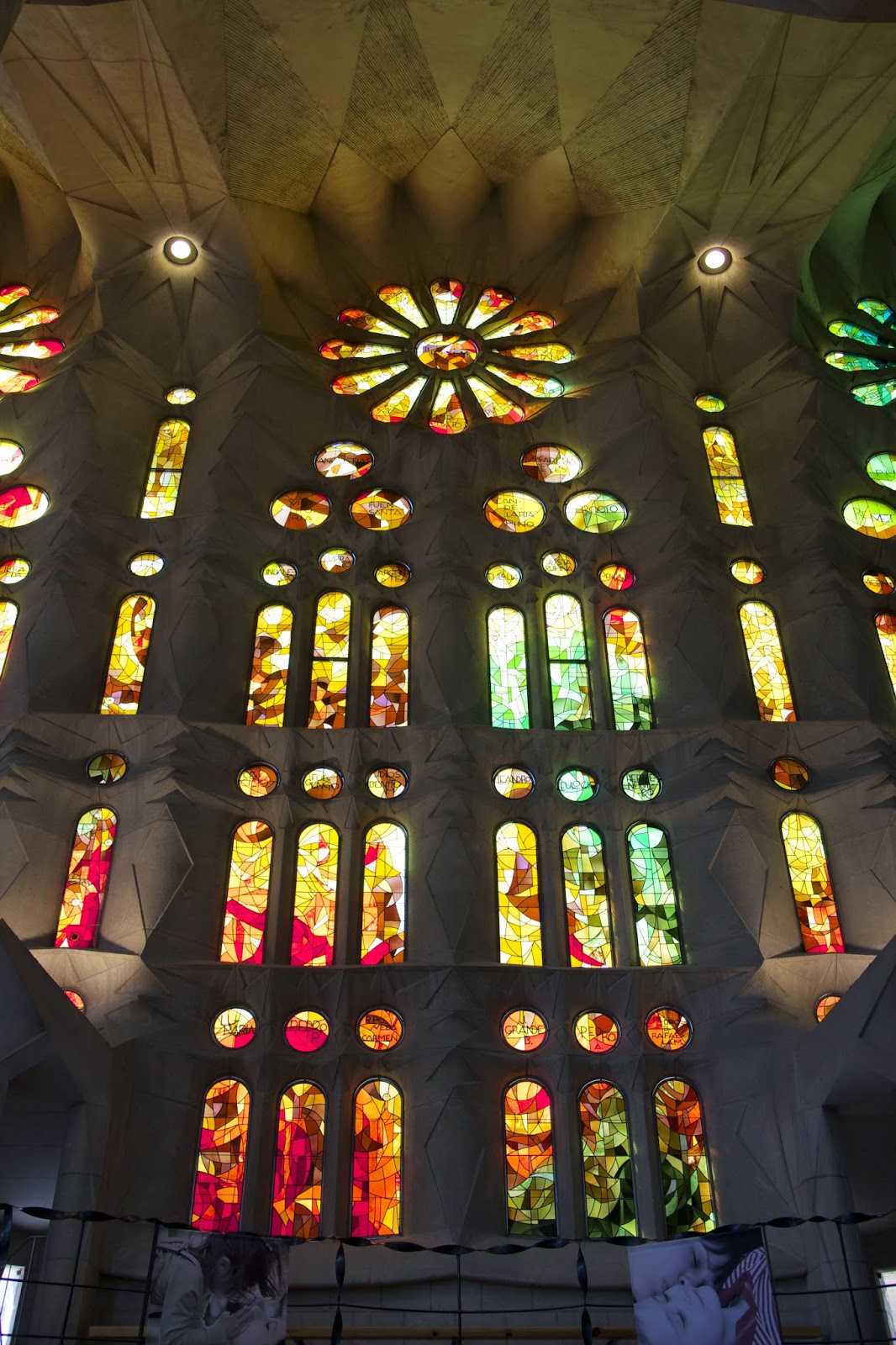
One side of the church features the nativity of Jesus and the Holy Family and the other side has the facade featuring the Passion. It is impossible to describe the detail involved - it must be seen.  The inside of the church has many facets and the colors in the windows were brilliant. The best feature of this church is the altar area. A crucifix hangs over the altar in a ring of candles. Above the crucifix is an opening in the ceiling that opens into one of the towers. In my mind, this is what the opening of heaven must be like.

I sat in meditation and cried at the beauty of this sacred place as I felt bathed in the Holy Spirit near the altar.  We visited the museum under the church that told of the building of it and featured the design of Gaudi.

We left this area and pondered what to do with the rest of our afternoon. The funicula was broken that takes one to Mont Juiic to get a view from the top of the city so that was not an option without hiking shoes. We considered shopping in the El Born district, but had no room to take anything back in our suitcases. It was too nice of the day to go inside to the Picasso museum and we didn't have enough time to visit Montserrat, a beautiful Benedictine monk mountain retreat about one hour North West from Barcelona by train. We considered renting a bike to ride along the coast line to the Maresme beaches 1 hour awayHowever, Paul had crashed his bike on the ride the day before and his elbow was hurting and his leg still had road rash.

We walked by a couple of Gaudi houses in the area, Casa Battlo and La Padrera (but didn't go to the Parc Guell where more houses are located) and strolled the Las Ramblas to return to our hotel. We returned to the rooftop bar at the hotel to research whether or not we could hear live music at the Palau Musica and they were sold out for the night. We then went back to the same Mexican restaurant for dinner (did I say that the Mexican food was a real treat for us after 6 months without?). We left early the next morning to return to our European home. Yes, we will go back to Barcelona to finish up the final notes to complete this symphony.


Wednesday, September 24, 2014

Definition of a Hero

I've known many World War II heroes in my life. But most of them didn't emphasize this often little-known fact about themselves to others. The years they spent in the war never came up in conversation, except sometimes incidentally. My Dad, three of his brothers, and three of my mother's brothers served in WWII and came home with medals. In my Dad's case, he received a Purple Heart, two Oak Leaves (essentially 2 additional Purple Hearts), four  Presidential Unit Citations, the European-African-Middle Eastern Campaign Ribbon, and a Combat Infantry Badge.  He also came home with a piece of shrapnel still behind his ear. He never talked about it.

I don't think my Dad ever knew the profound impact his years of service had on the world. There are two kinds of heroes. Heroes who shine in the face of adversity, who perform an amazing feat in a difficult situation. And heroes who live among us, who do their work unceremoniously, unnoticed, but who make a difference in the lives of others. My dad was a hero in both regards.

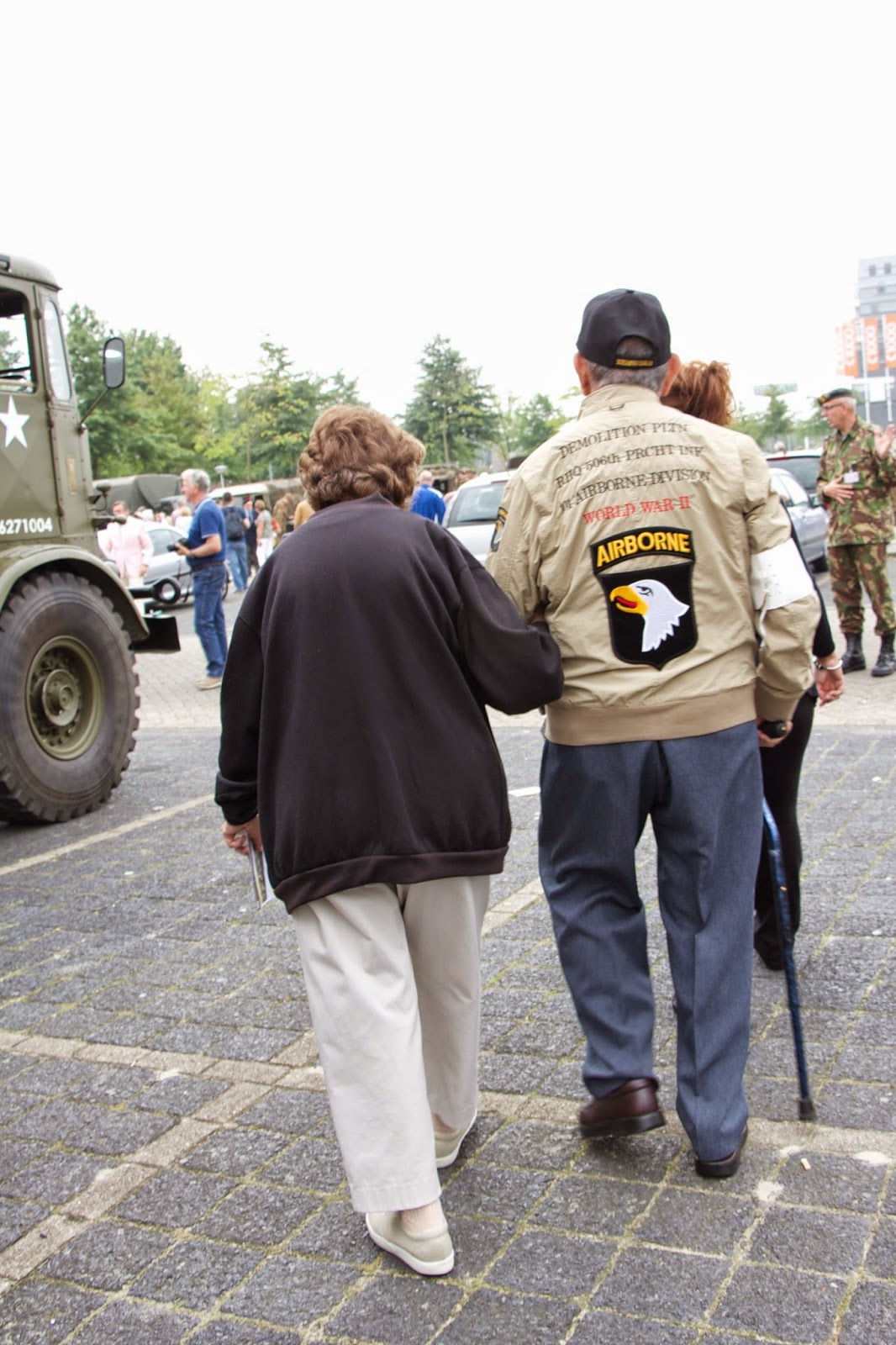
Last week, I was able to spend some time in the company of WWII veterans who are also heroes.  They came to the Netherlands to commemorate the 70th Anniversary of the Liberation of the Netherlands. One American veteran named Armando Marquez, 90 years young, was in the 101st Airborne and dropped into the Netherlands in 1944 during Operation Market Garden. He was flown by the Dutch government from El Paso, Texas to the Netherlands with his wife Christina of 66 years and his daughter Martha to attend the week-long ceremonies to commemorate the 70th anniversary of the Liberation. I met with him at a lunch stop in a tank and military vehicle procession and got to know a little bit about him. We bonded as fellow Texans, he said he was glad to know someone from home. This was his first trip back to Europe since the war. In coming back, I think he was starting to know the impact his service made on this world. His regret was that from his company, he was the only still living.

Many attending the procession wanted Armando's autograph, some wanted to ask him questions about the war, and others just wanted to say thank you. During our conversation, we were interrupted many times by others who wanted some of his time. I commented to him that he was like a "rock star", considering the following he had among the attendees. I asked his wife if he told any stories of the war and she mentioned that he wouldn't keep quiet about it. Armando leaned over and said he only told the good stories.

Armando's first jump during combat was in Normandy and his second jump during Operation Market Garden, when he landed in Son. He lost his helmet during the jump and grabbed one from a soldier who unfortunately would not need his after his jump. In Armando's home in El Paso, he has a photo of a German tank in the streets of Eindhoven, newly decorated with American flags after the liberation.

Later, I asked Armando if he realized that these people thought he was a hero. I mentioned to him I talked to a gentleman during the procession who was a 8-year-old boy during the Liberation of Eindhoven 70 years earlier. This man remembered the tanks and military men in the streets that day and in his mind, those men saved his family and his country. Armando smiled and didn't answer for a while. He said that he supposed that perhaps they thought he was. His smile was slow. It is worth celebrating 70 years if for only to let one veteran know that his courageous efforts and service in the World War II really mattered. Armando is an ordinary hero from Texas whose actions 70 years ago defined greatness.

Tuesday, August 12, 2014

Visiting the Ardennes looking for more WWII History


My Dad was in the infantry in WWII, serving in the Africa and Sicily campaign under General George Patton, then in Normandy and finally in Germany, where he was located in the Hurtgen and Ardennes forest during the Battle of the Bulge. Last summer with my sister, we retraced his steps in Normandy and Germany and I have blogged about our experience there. Next summer we are going to find the spot near Mt. Etna in Sicily where he was injured the first of three times during the war. In recreating my Dad's steps in WWII over the last 15 years, I have become extremely interested in learning about the war, and what his experience may have been like when he served, as well as the experience of other soldiers and civilians. (Several blog posts previously posted about my Dad serving in WWII:  WWII blog posts about retracing my Dad's steps in WWII )
When my friends Kate and Lee from Austin came to visit, we took a weekend to visit Luxembourg and Bastogne, Belgium to see the area when the majority of the Battle of the Bulge was fought in the Ardennes forest and also to visit the American Cemetery in Luxembourg where Patton is buried.

We started in Luxembourg City. We had previously booked a bicycle ride in the Moselle Wine region to visit some
wineries. This was cancelled right before our trip, so we ventured in to Luxembourg City to see what we might find there. What a treat it was! Luxembourg was started in the early Middle Ages because it was at the crossroads of two Roman roads. A huge castle was built and over the years, it became an important fortification in early Europe. It has been occupied by the Burgundians, the Spanish, the French, the Spanish again, the Austrians, the French again, and then the Prussians. Germany invaded and headquartered here during WWII and finally after the war,  it was restored as it's own nation. There are tunnels, walls, gardens, an old abbey,  viaducts, and a Catholic church dating back to the 12th century. The topography drops over 230 feet (or 70m) and it is very picturesque. 

Walking through the area, it is a bit like a 3D maze because of the topography of the area. It is possible to look out across the city to see where you want to go, but have no idea how to get there. We climbed and descended the landscape to uncover all the treasures in the city. The best part of the day was finding the elevator and the biggest surprise was hearing the screeching air raid sirens to commemorate the 100 years since the start of WWI in Luxembourg. The noise was ear-splitting and it is always a bit scary to hear air raid sirens. We later enjoyed a typical Luxembourg dinner (passed on getting the pig knuckles) and local brew. A couple of bachelor parties found us and whatever the tradition is, we were given a carrot by the future groom. I am not sure I want to know what that might signify.


The next day we started early to visit the American Cemetery in Luxembourg, the second largest WWII cemetery in Europe. It is also where Patton was buried after his early death due to a car accident in Luxembourg shortly after the war. In paying respects to the soldiers of the war, I noticed a couple of brothers that were buried near each other, many graves of unknown soldiers, and a ceremony where a family had come to place flowers on the grave of a loved-one. Patton was originally buried among his soldiers, with the tradition that in death officers were buried alongside their troops. However, Patton's body was moved to a special area in the cemetery after nearby graves were trampled because of the traffic due to visiting Patton's grave site. I believe my Dad had seen Patton when Patton was his commander in Africa and Sicily after reading some After Action Reports of my Dad's unit in Africa and Sicily, though I don't know for sure. Patton spent much time in front of his troops to get them ready for battle.

After a short visit, we set off for Bastogne, Belgium to visit the Bastogne War Museum and Mardasson Memorial. It has been recently reopened in March of this year after extensively renovations. It focuses exclusively on the Bulge campaign and the story is told from the viewpoint of 4 characters: an American soldier, a German soldier, a female schoolteacher who was a member of the Belgian resistance, and a Belgian school boy who grew up during the war. It was only at the end of the museum tour that we realized that these characters were not made up - they were true stories about the lives of these four people during the war. I had been a little confused about the Belgian experience of WWII and this museum perfectly explained how Belgium was affected by the war and how they participated though defeated early by the Germans. I saw at the end what I believe to be the gun that my Dad started the war with - a Browning Automatic Rifle (BAR) machine gun which is a two-person assembly (one for the gun and the another for the stand and water cooling apparatus that is required). The Mardasson Memorial nearby talked specifically about my Dad's unit during the Battle of the Bulge.

We left the Museum to find some original foxholes and to also see the area that was featured in the documentary "The Band of Brothers". My Dad told the story of getting in trouble and reprimanded by an officer because either the manner he dug his foxholes or jumping in the foxhole that was dug for an officer.  While crossing the Meuse River at Hastiere, Belgium, all of my Dad's unit was lost (except my Dad who was in the hospital after he was hit the second time in the war). My Dad arrived in Monschau, Germany after his second hospitalization and integrated new soldiers and officers into his unit. From what we've read of the battle, we believe he was the only veteran soldier left in his unit. Dad must have been devastated to know that his Army buddies of three years were gone. He also must have been affected to know that he would be away from home for his third Christmas.

We don't have the details about the story around the beginning of the Battle of the Bulge, but we have surmised that his officer apparently tried to tell him how to dig a foxhole. My Dad had actual war experience that the officer did not. My Dad dug the foxhole as directed, but also dug another foxhole to HIS specifications. When the air strafing started by the German Luftwaffe, my father jumped in the foxhole that he dug that he thought would better protect himself during the fighting. He faced discipline from his officers for not using the specified foxhole, but he survived the attack by using the one he dug the way he thought it should be done. Also, at one point, my Dad told me that he had a profound belief in God because every time he was hit in WWII, he knew that morning while rising from his foxhole that day, he would be hit that day. It was important for me to see a battle field and some actual foxholes.

As Patton said, "Wars may be fought with weapons, but they are won by men. It is the spirit of men who follow and of the man who leads that gains the victory." Living in Europe gives me the opportunity to try to understand the war that took the lives of many and that changed the lives of all.