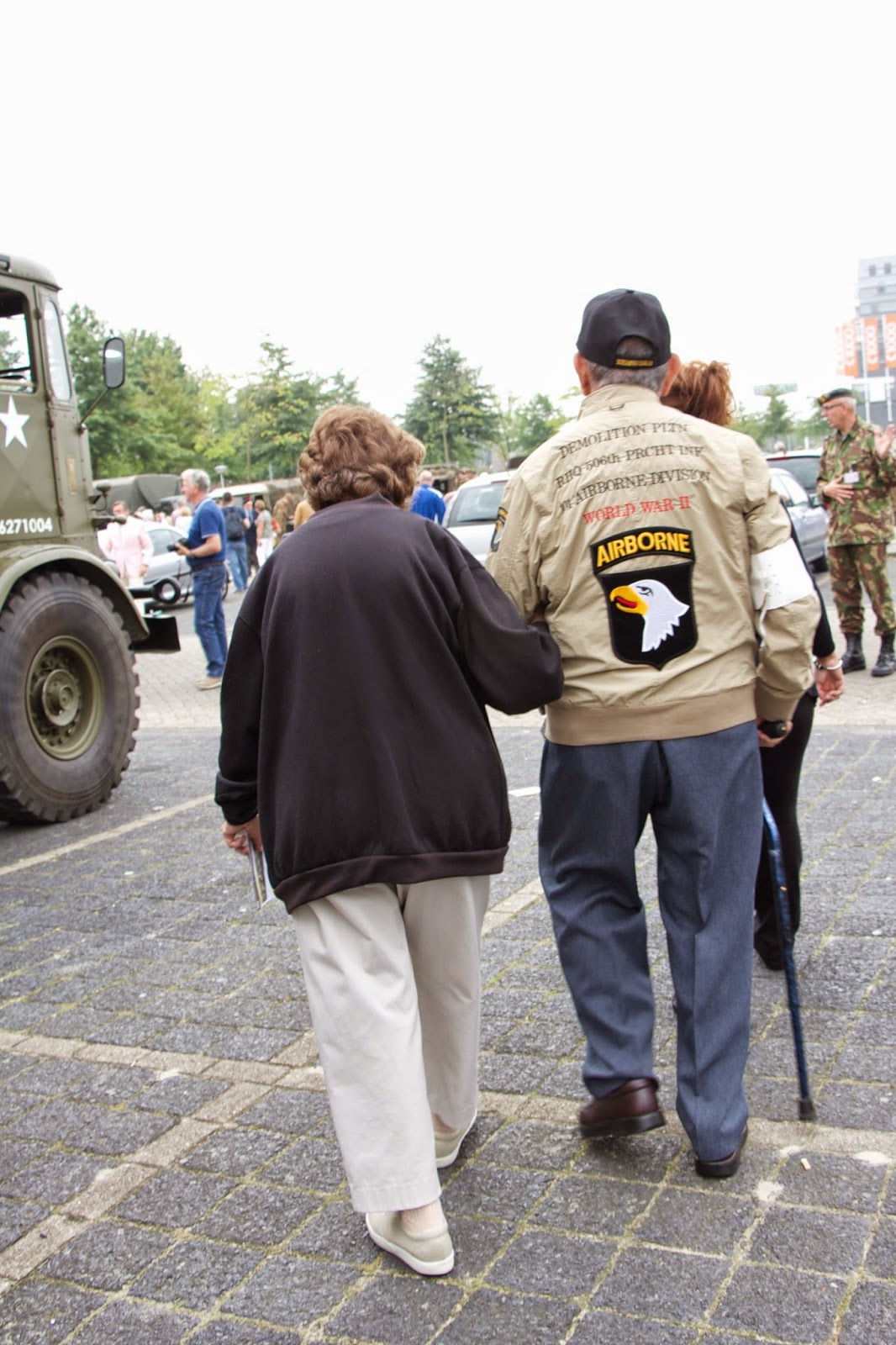
My sister and I, with our husbands, arrived in Sicily and
immediately noticed the rugged ancient hilly environment. On the hillside,
there were abandoned houses that looked to be about 1000 years old – literally.
We drove from Catania airport to our base at the Hilton Resort in Giardini
Naxos near Taormina, the eastern side of the Italian island. Our hotel view was
of the Sicilian beach, but we immediately went to the other side of the hotel
to view Mt. Etna. As my sister said, “Dad only said about seven words about his
experience in WWII, and two of those words were Mt. Etna.” We were now looking at what Dad saw
when he arrived the beginning of August in 1943. We were to meet our guide the
next morning to have him accompany us to the region where Dad fought, to see
the terrain, if not the spot where Dad fought and was injured for the first of
three times in the war.
Dad’s march in
Sicily - From After Action Reports July 31 - August 14, 1943. (WWII era photos from Robert Capa):
Dad had already served under Patton in Tunisia – arriving in
North Africa April 13, 1943. After success in Tunisia, his Battalion left the
port of Mers El Keber – half way
between Casablanca and Tunisia - for
Sicily on July 29th
aboard the ship S.S. Orbiza They arrived in Palermo, Sicily late afternoon July
31st. It was too late to
unload the ships so they stayed the night on the ship. At 4am, the next
morning, German planes raided the harbor. The first attack was for 50 minutes
and a second attack followed 15 minutes later lasting for 25 minutes. Fortunately, no ships in the harbor
were hit by German bombs. Later
that afternoon, the regiment disembarked and marched 15 miles southeast of
Palermo to a bivouac area.

Starting at 11am, August 2nd, the regiment moved
by motors to an assembly area approximately 7 miles east of Nicosia, Sicily.
The equipment arrived August 3rd and the Regiment got ready for
combat. After the officers reported to headquarters, they were told that they were supposed to be on Mt. Pelato by
late August 5th or early August 6th. And their movement was supposed to be
“with utmost secrecy” so the
Germans would be taken by surprise. They would move along the ridge line to the
east and take the ground in the area of Mt Camalato. This would prevent the
Germans from using the road between Cesaro and San Fratello, a major
north-south passage. Afterwards, they were to take the town of Cesaro with the
47th Infantry who was coming from Troina to Cesaro. To keep it
secret, the movement of the troops would be at night. So during the night of
August 3rd, the 2nd
Battalion moved to an area southeast of Capizzi., had four hours rest and then
moved to north of Capizzi. A German detached patrol, estimated as a patrol,
with pack mules was surprised when the leading element reached Mt Camelato.
They fled, leaving their equipment, arms, and animals.

On the night of August 5th, the 2nd
Battalion moved from their position following in the footsteps of the 1st
Battalion. They arrived northeast of Capizzi just after daylight on the morning
of the 6th after a very difficult night march over very rough
terrain. Dad was in Company E and
was lead by Stephen Sprindis (who would later make a name for himself in
Normandy). The 4th Tabor Goums (French Moroccans) were attached to
the Regiment and were directed to move to Piazza Tredicno with the mission of
getting reconnaissance to the north and east of the regiment as it advanced.
Also late on the 5th, Anti-tank equipment moved into the area north
of Capizzi. It was too difficult to get most of the equipment into the area so
they reorganized into a “Pack Howitzer Company”. They used mules from area towns to bring in what equipment
they could.
The night of August 6th, the Battalions advanced
with the 1st leading the way, the 2nd taking over where
the 1st had been and the 3rd Battalion keeping the
stronghold behind the 2nd Battalion. They fulfilled their mission of taking Mt. Pelato by the 6th
of August.

The morning of the 7th of August at 05:30, they
were directed to seize Mt. Camelato and then join the 47th Infantry
and capture Cesaro – an area where Germans were concentrated as they fled the
American troops. As movement began, there was contact with the enemy and there
were heavy concentrations of mortar and artillery fire. To the rear of the 2nd
Battalion, there was an ambush by an enemy patrol estimated in number at
approximately 30 men. The IV Tabor Goums returned to the area with 3 German
prisoners. They found a considerable number of enemy on the forward slope. An
artillery concentration was put in place and as soon as the artillery occupied
its new position, the enemy was attacking. The enemy had excellent observation
from the high ground to the northeast. At 10:00 the 2nd Battalion was ambushed by a
strong German patrol and caused 5 casualties.
Due to heavy fire, 100 men from the 3rd Battalion
to the rear were used as litter bearers to evacuate all the wounded from the 1st
and 2nd Battalions to the rear of the front lines using poles and
blankets as improvised stretchers. There were 27 dead and over 100 wounded. It
was difficult to extract the wounded and took until morning – about 12 hours -
to get them all out over the difficult terrain.

Dad was one of the wounded from this day. He was hit in the
leg and received a Purple Heart for his bravery. He was taken via ship to a
hospital in England where he remained for 2 months to recover. Dad’s brother
Harold visited him in the hospital and then sent Dad’s Purple Heart and the
shrapnel from his leg to their parents to keep. Dad was returned to duty after
he recovered. Another brother Frank also served in Sicily but managed to come
out of that battle without injury.
The Germans were on the run and a week later on August 14th,
the American troops reached Floresta, Sicily. Germans blew two bridges on their
way out as well as mined and cratered the main road. The Germans had reached Messina on the coast to leave Sicily
altogether. Some Italian soldiers left in towns surrendered without offering
any opposition. This closed the Sicilian campaign as Mussolini surrendered and
Germany lost Sicily.
Our Experience Following
Dad’s Steps

Marcello, a native Sicilian, met us in our hotel lobby at
09:00 and we started by showing him the combat maps that we had of Dad’s
Battalion during the weeks of August 1 – 8th, 1943. Marcello was an
archaeologist by trade but worked as a tour guide to supplement his income. He
had some knowledge of Operation Husky and knew the area very well.
We asked him to start our tour in Capizzi, since that would be the
closest town to where Dad fought. He immediately declined to take us there. He essentially said that we would not
be received well in the area for several reasons. First off, he said that by the
time the battle took place, the Germans had already left Sicily for the most
part. They left a few patrols to move around and shoot to make it look like
there were many Germans left on the island. Secondly, Patton wanted glory so he
came in and bombed the area (after the Germans had left) so that he would look
good. The citizens in Troina and Capizzi met the US military with white flags out. Many Sicilian citizens told the soldiers and commanders that the Germans were
gone – there was no need to bomb. Finally, Patton brought in mercenary soldiers
called Tabor Goums (who were French Moroccans) according to Marcello. These soldiers went into
Capizzi and ravaged the town, by murdering and beheading citizens, stealing and
violating women and children. Most
people in Capizzi were still affected by WWII and he would not take us there.
He also said it was a rugged part of the country infested with wild boars and was only reachable by foot using an abandoned rail road to get there. Besides, we would not have the
vantage point to see the battleground from there.Our hopes were dashed - we would not be walking on the ground where Dad was injured as we did in France.

Marcello suggested that we go to Troina instead, a city that had a
vantage point of the battlefield. Troina was settled in the 7th
century BC by the Greeks and there have been Roman baths discovered from the 4th
century BC. This town was conquered
by the Normans in 1061, led by Count Roger and he established his residence in Troina, founded the
monastery of San Basilio and the first Norman diocese in Sicily. (Marcello
thought it was ironic that our Dad also served in Normandy, right after he
served in a town settled by the Normans).

We stopped about 30 minutes prior to reaching Troina to stop to take in the beauty of the area. The impact of the terrain was ominous as we thought of our Dad fighting near here. There were mountain villages that were built in the first few centuries and at the top of the mountains were caves and tunnels that were still in use. We shot some photos and climbed back in the car to visit Troina. Marcello mentioned that he would try to find older citizens in the area so that we could talk to them about what they remember and what it was like for them.


From this point, we could see the entire landscape of the
Nebrodi National Park that served as the battleground during the war. Basilio
inquired which unit our Dad was with and then proceeded to point out where the
Germans were pocketed and how the battle progressed by day. By the recently-constructed dam was the area where 30 Germans were pocketed and shot freely at the US troops for 2 1/2 days while the rest of the German troops abandoned the area towards Cesaro. The Germans used tunnels to store their weapons near Cerami, southwest of where we stood, and where more Germans were located. A bigger battle occurred there with hand to hand bayonet fighting involving US troops and Germans. Basilio pointed out Mt. Pelato and we
recognized this name as the peak where Dad was wounded August 7th. Mt Pelato is in the hills to the right of the dam - the bald peak near the horizon mid-picture. That day, Mt Pelato was shadowed by a puffy cloud that stayed overhead, making it easy to identify which hill it was. We asked if they know
how the injured were evacuated and they supposed they were taken out by their
fellow soldiers or by mule over the top of the ridge to the port in Messina, though they could have been taken back to Nicosia to a bivouac area with road access to Palermo and waiting ships.

We followed Basilio through a neighborhood, into a building,
and up some stairs to a museum that was being constructed. One room had costumes from medieval
times. Another room had about 15 photos and newspaper articles from the 1940s and WWII maps of the Sicilian
Campaign. We were able to stay for
a few more minutes before the museum closed for siesta hours. Basilio promised
to send us copies of the photo set by Robert Capa.
We walked back down the street to the base of the city to our
car. As we walked along, Basilio
told us about various buildings along our walk. One wall remained from the 12th
century. The Augustine church near our car had workers inside restoring the
building. Basilio bought us a coffee and wouldn’t let us pay him for his time.
As Marcello translated, Basilio said it was his honor to spend the day with us.
It made his day to give us the story of our father.

 Right before we got to our car, I saw another poster made from photos of Robert Capa from the battle during World War II. It has a city wall that was damaged by bombing and from there a viewpoint of the 11th century Augustine church at the base of the town, where we parked our car. The city wall was damaged in this photo, but then restored after the war and that is where we stood with Marcello and Basilio to discuss where our father fought. Seventy-two years have passed between Dad being here and our visit. Though he never talked about it, I felt a closeness to our father, who was 21 when he fought in this region. My dad was a hero, several times over. He carried those horrible memories privately to his death. I marvel at what it took to face the enemy and come out a hero. To mourn is respectful, to remember is holy.